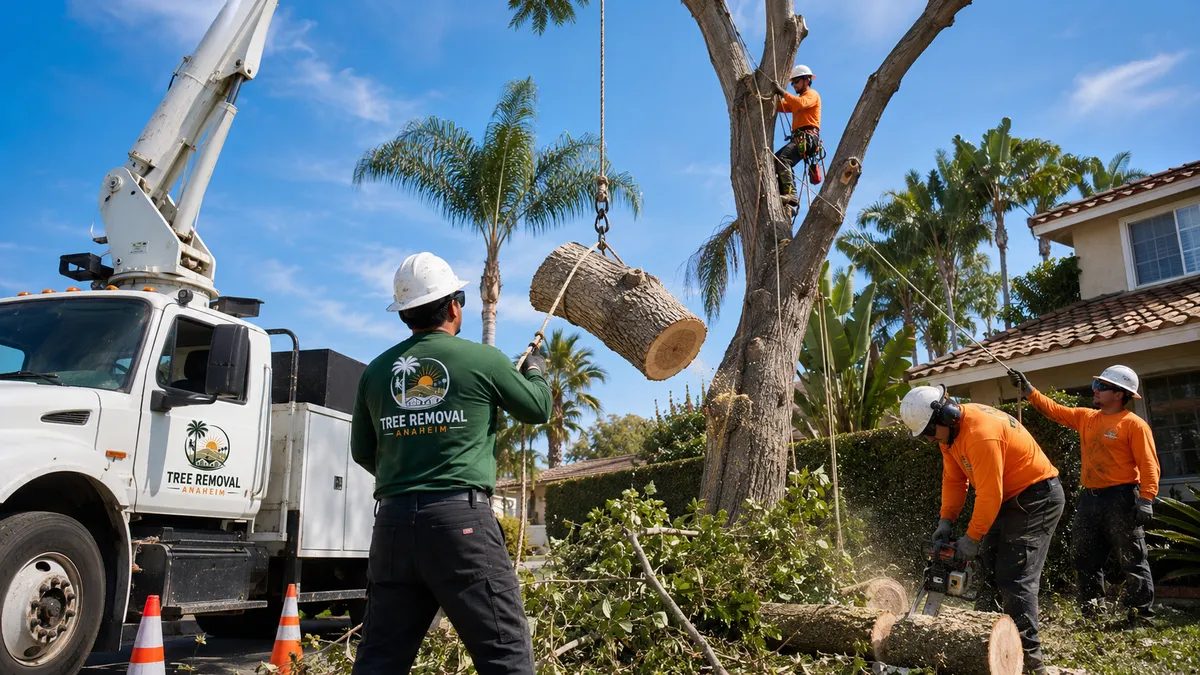
Controlled lifting for difficult removals
Crane-Assisted Tree Removal in Anaheim
Find out whether crane access makes sense for your tree. Get a Free Estimate
When Lifting Is Better Than Lowering
A crane is not necessary for every large tree, but it can be the right tool when a tree is extremely heavy, structurally compromised, difficult to climb, located behind a structure, or positioned where conventional lowering would require excessive rigging. Crane-assisted removal allows sections of the tree to be supported before they are cut and then moved to a designated processing area.
The key is planning. Crane capacity alone does not determine whether the setup works. We also consider reach, boom position, tree weight, section size, landing area, street or driveway access, overhead obstacles, setup space, ground conditions, and the path each lifted piece must travel. A crane removal succeeds when the tree crew and lifting operation are coordinated around the same sequence.
Tree Removal Service Areas Near Anaheim
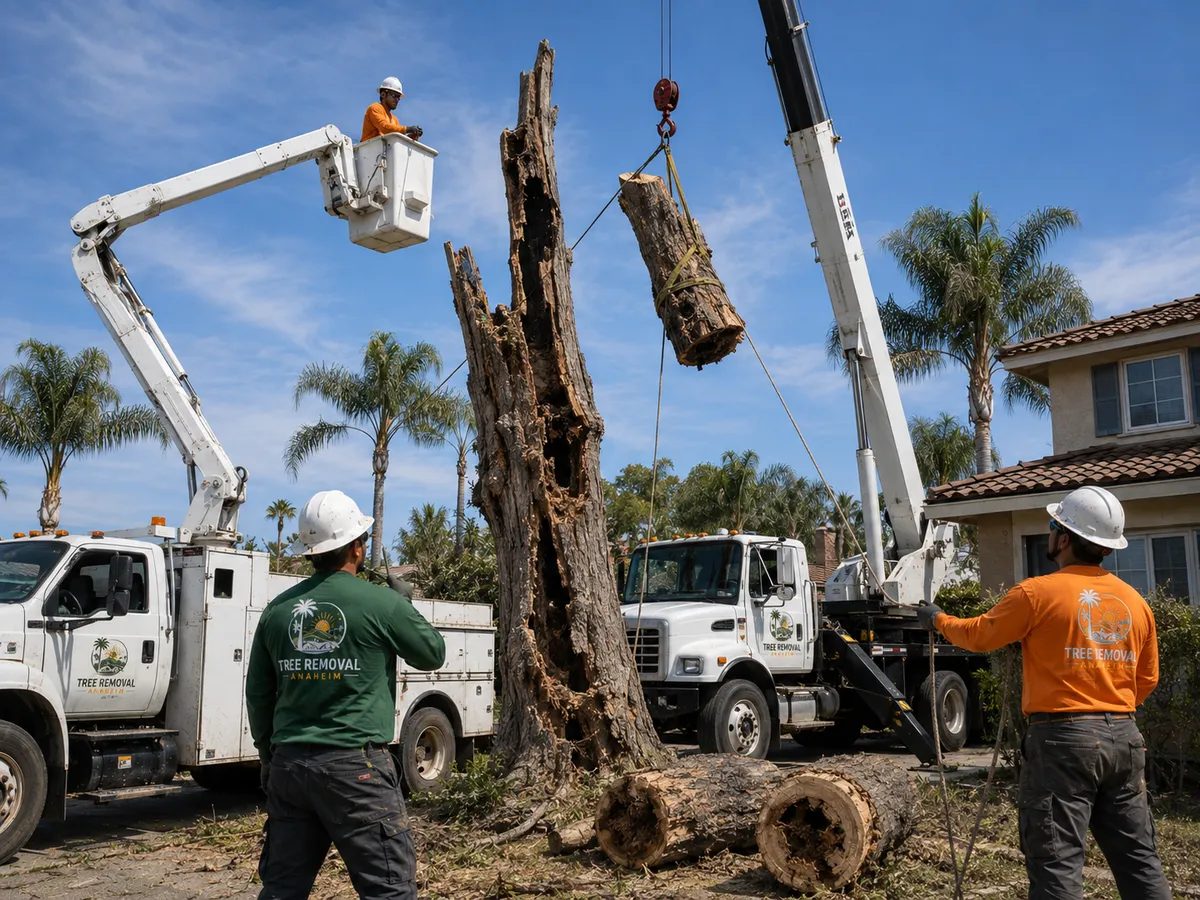
How Crane-Assisted Tree Removal Works
During a crane-assisted removal, selected sections of the tree are connected to the lifting system before the final cuts are made. Once a piece is separated, it is moved away from the tree and placed in a controlled processing zone. This can reduce the amount of material that must be lowered through a crowded canopy or passed over sensitive areas using conventional rigging. Crane assistance can be especially useful for large trees behind homes, trees with questionable structural integrity, heavy eucalyptus sections, trees on slopes, or removals where a narrow work zone leaves little room for ordinary dismantling. It is not automatically faster or cheaper in every situation, so we evaluate whether the access, reach, and lift sequence genuinely improve the job.
Large tree removals
Crane lifting can help manage very heavy branches and trunk sections by moving them directly to a designated processing area.
Trees behind structures
When a tree stands behind a home or other building, sufficient crane reach may allow sections to be lifted over or around obstacles without moving them through tight ground access.
Compromised trees
Some damaged or decayed trees are poor candidates for ordinary climbing and rigging loads. Crane support may reduce how much the remaining tree must carry during dismantling.
Slope and hillside removals
On certain sloped properties, lifting material away can be more practical than trying to move heavy logs and brush down difficult terrain.
Tight landing zones
Where there is almost no safe drop space, crane assistance can transfer pieces to a separate area with more room for processing.
A useful estimate is based on the actual tree and site rather than a generic price table. The main cost factors include:
Crane access and reach
The crane position, working radius and ability to establish a safe setup area are central to the plan.
Tree weight and lift sequence
Section size and estimated weight determine how many lifts are needed and how the tree is dismantled.
Property constraints
Buildings, slopes, narrow access, utilities and limited landing zones can affect crane selection and setup.
Processing and hauling
Lifted sections still need a safe landing, cutting area and practical route for removal from the site.
Photos showing the whole tree, the base, access route and nearby structures can help make the first estimate conversation more useful.
Crane-Assisted Tree Removal Planning Priorities
Crane use with a reason
We recommend crane assistance when it improves control, access, or efficiency rather than treating it as the default for every large tree.
Lift planning before cutting
Each section needs an understood weight range, attachment position, movement path, and landing area before separation.
Tree and property considered together
We look at roofs, driveways, walls, slopes, utilities, neighboring property, landscaping, and equipment setup as one connected work plan.
Coordinated crew roles
Larger lifting jobs require coordinated cutting, signaling, material handling, and processing so every stage follows the same planned sequence.
Contact Us Today for a Free Estimate
If a tree is too large, unstable, or difficult to access conventionally, we can evaluate whether crane assistance is practical.
Free — no obligations
Our Crane-Assisted Removal Process
Evaluate access and reach
We identify potential crane positions, tree distance, overhead obstacles, ground conditions, and usable processing areas.
Build the lift sequence
The tree is divided into planned sections with consideration for estimated weight, balance, attachment, boom position, and movement path.
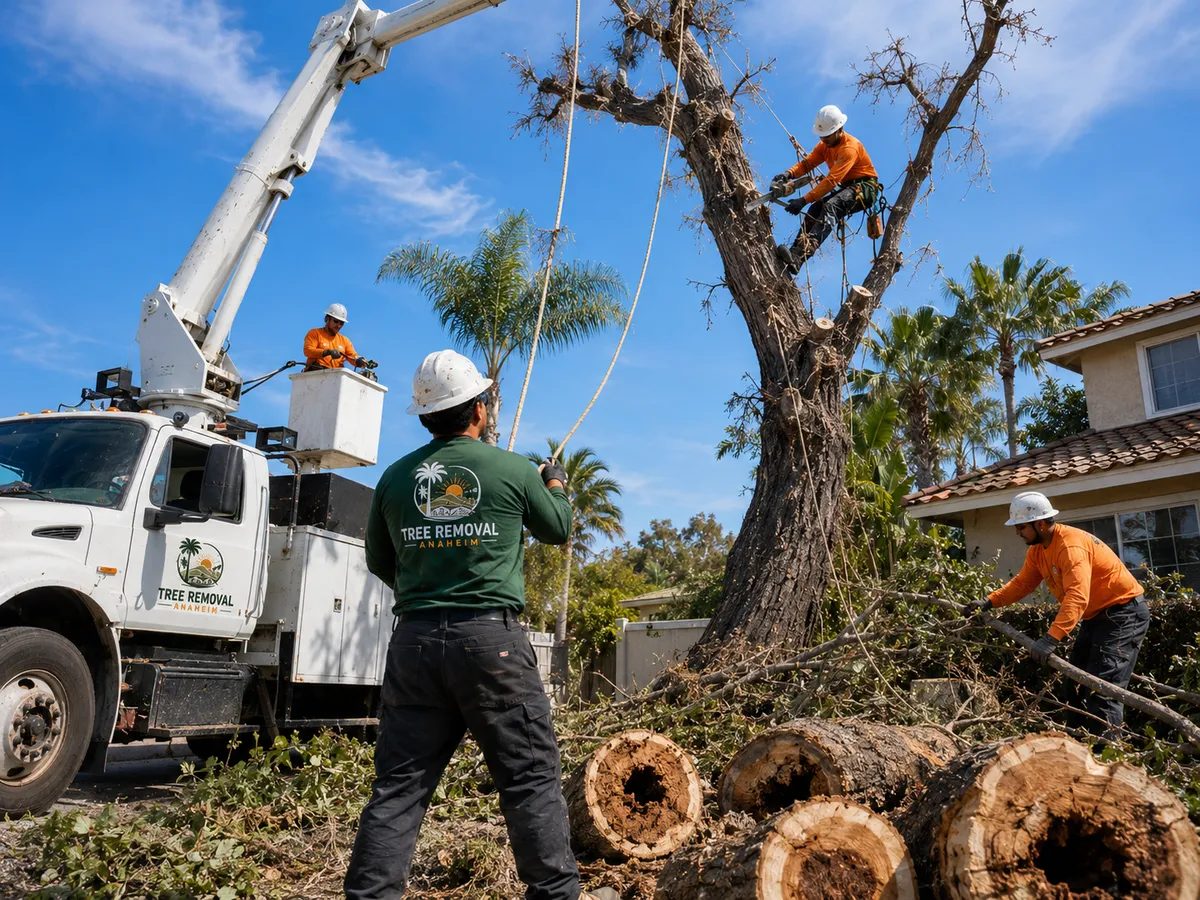
Support, cut, and lift
Each planned piece is supported before the final cut and then transferred away from the tree in coordination with the lifting operation.
Process and clear
Lifted material is broken down in the designated work zone and removed according to the agreed job scope.